The Roman Empire had a single currency 1,700 years before the introduction of the Euro. Merchants in Constantinople, citizens of the Eternal City to soldiers stationed on Hadrian’s Wall – they all used and recognised the numis coin. This is simlar to the Euro in Europe today.
Trade across the Continent
So, in January 2002 when seventeen European nations formally adopted the Euro after scrapping their own currencies, a single currency was not something new. The purpose of the Euro was to simplify trade across the European continent.
The Romans used the numis coins as part of the Roman conquest. And, not just for conquest sake, but to help subsidize the Empire and their bartering system and to standardise taxation. The value of the coins was based on government decree and not on the value of the content used in the creation of the coinage. Thus a very high number of coins were minted. Inflation was inevitable when too many coins entered the system.
Diocletian’s tried to deal with the inflation by introducing price controls when things got a bit out of hand. Sadly this failed. But his introduction of coin denominations, helped to streamline the system as much as possible.
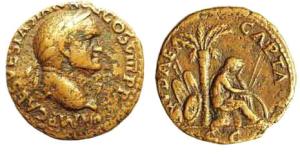
As with the Euro, the Roman coinage had a standardised design on one side and some kind of representation of the country the coins came from on the other.
Control of the Numis and the Euro
For centuries, the Roman single currency was the dominant currency in Europe. And the Euro has only, to date, been in circulation for just two decades. The main reason for this is that only one government, the Roman Empire, controlled the Roman single currency.
Today the situation is much more complex. The financial concept and management of the Euro involves more governments than simply one government or authority, as in ancient Rome. Politics and global economics play an important role in the Euro today.
In 400AD the Roman Empire started to crumble. The Romans retreated from across the Continent and took with them their coinage. This was devastating for the British economy. The currency did not just collapse, it was completely removed from Britain. No money meant no trade. It was the biggest financial disaster Britain had ever, and probably ever will, be a victim of. People abandoned the cities and the whole country became vulnerable to invasion from all angles.
This ushered in a period of instability and darkness which later became known as The Dark Ages.
Although the numis and the Euro have had a similar patt, let’s hope the fate of the euro is not the same as the numis.